Goal Setting
Updated January 2026
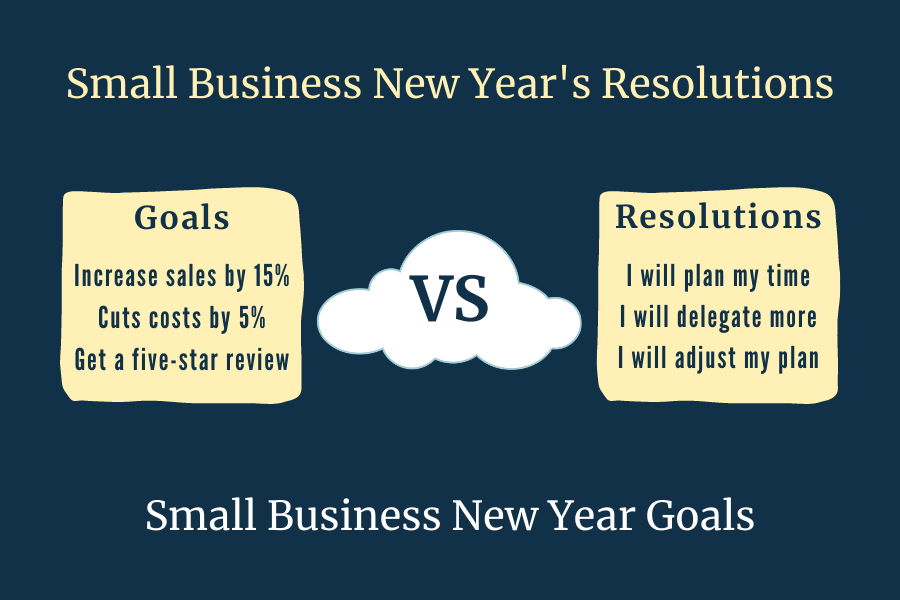
Happy New Year! Around this time of year, we hear a lot about resolutions. We resolve to “save more,” “spend less,” or “grow the business.” But at KATA Accounting, we’ve noticed a pattern: resolutions are often just wishes in disguise.
While a resolution identifies a behavior you’d like to change, a goal is where the real magic happens. It takes that ambition and adds the vital details—the “how,” the “when,” and the “how much”—that turn a vague idea into a measurable result. We want to see you reach the finish line, not just start the race. That’s why we’re big advocates of the SMART Method. In this post, we’re breaking down exactly how to bridge the gap between where you are and where you want to be.
SMART Goals
SMART is an acronym for Specific, Measurable, Attainable, Realistic and Timely or Time-bound.
This was developed by George Doran, Arthur Miller and James Cunningham and published in a 1981 article which is paraphrased in this blog post.
For a goal to be considered a SMART goal, it must meet all criteria.
Specific
Goals need to be set for specifics. Set something clear and helps you understand precisely what you’re trying to accomplish. What are you trying to do? Who is going to be your customer? Why are you trying to grow your business? The more specific you can be about the goal, the more likely you’ll be able to achieve it.
Measurable
For a goal to be practical, it needs to be measured.
That which can be measured can be managed.
– William Thomson
If you can’t measure the goal you’re trying to achieve, how will you know if you’ve achieved it? Consider how you will measure your success and assess whether or not you’ve achieved your goal.
Attainable
A goal needs to be something possible to achieve. If you don’t have a way to achieve the goal, then there is some work to be done before you can consider the goal attainable.
Realistic
For a goal to be realistic, it has to be attainable by the team and the tools you have in place now. If you don’t have the resources to reach the goal, it’s better to make it a longer-term goal and do the pre-work more immediately. This could include getting the right team and tools to help you get where you want to go.
Timely/Time-bound
All goals need a deadline to be effective. Goals without a deadline are ambitions and not SMART goals.
For instance, “I will generate $1 million in sales,” without a deadline, means you could take the next 50 years to generate those sales. “I will generate $1 million in sales in 20YY” has the potential to be a SMART goal.
Almost SMART Goals
“I will lose 10 pounds by June 1st, 20YY.”
This goal is specific, measurable, and has a deadline. Whether or not it is attainable and realistic depends on your personal health situation and the environment in which you live.
“I will increase revenue by 15% in 20YY.”
This seems like a SMART goal at first, but without understanding your resources, it’s unclear if it’s realistic or attainable.
“I will hire two new people this year.”
This goal is dangerous. The underlying questions of why and who must be thoroughly considered before hiring decisions. Do you need two more people? What skills are they bringing to the table? How much revenue will they earn for you through their duties? Where will you find them? How much will you pay them? Is your business still profitable with these new expenses?
What’s Your Why?
Understanding your strategy and motivation are the first steps to setting SMART goals. Now is a great time to sit back and think about the big picture of what your business does.
- Why does your business exist?
- Why does it operate in your chosen manner?
- Why do you choose to work with the staff you have?
- Why are you continuing to do business with your niche of customers?
A powerful why will lead you to great things. A weak reason can be a recipe for disaster.
Achieving Goals
The following are some examples from Lifehack.org about how to achieve goals successfully. We’ve added what we feel is most important:
Make Sure You Are Setting a SMART Goal
SMART goals are specific, realistic, and measurable.
Write Your Goals Down
Numbers don’t lie. When a goal is written down, it is far more likely to be achieved. If it’s just in your head, it’s just an idea.
Have a Goal Setting System
When and how often will you review the goals you set? When and how usually will you set new goals? What measurable intelligence do you have (or can develop) that will help you set better goals?
Plan on How to Achieve a Goal
A goal without a plan, even a SMART goal, will be challenging. What do you have to do to achieve the goal? Creating a step-by-step plan will be instrumental in helping you get there.
Seek Expert Help
If your goal is to increase revenue through sales and you don’t have a clear understanding of your cost structure, you should review it. If you still aren’t sure, seek management accounting help.
Be Accountable for the Goal
Whether that is to your spouse, yourself or an accountability partner, accountable people are more likely to achieve their goals.
Don’t Beat Yourself Up
Give Yourself Permission to Pivot. Here’s a refreshing truth: You probably won’t hit 100% of your goals this year—and that’s okay! But dwelling on a missed target is a total motivation-killer, and it doesn’t help you grow. If you find yourself falling a little short, don’t beat yourself up. Instead, put on your “detective hat” and look at the why:
- Was the goal truly SMART? (Maybe it was a bit too ambitious for the timeframe?)
- Did life get in the way? (It happens to the best of us!)
- Do you need better tools? (Sometimes you just need a better system or a helping hand.)
Think of a missed goal not as a “fail,” but as a reset. Take what you’ve learned, adjust the plan, and set yourself up for a win next time. You aren’t starting over; you’re starting again with more experience!
Be Inspired
Success is rarely a solo sport! The energy of the people around you can be your greatest wind-at-your-back—or the very thing that slows you down.
To keep your momentum high, try to surround yourself with people who radiate positive vibes and believe in your vision. Constant negativity can really drain your confidence, even when it comes from people who mean well. However, there is a “sweet spot” to look for in your inner circle:
- Avoid the “Constant Critics”: We all know someone who can spot a problem in every solution. If they aren’t offering a way forward, their feedback is just noise that stalls your progress.
- Be Wary of “Yes-People”: It feels good to be told you’re always right, but it doesn’t help you grow! Someone who agrees with every idea—even the risky ones—can actually lead you off track.
- Look for the “Solution-Seekers”: These are your gold-standard partners. They are positive enough to keep you inspired, but honest enough to give you constructive feedback. They don’t just point out a roadblock; they help you find a detour.
The Bottom Line: Build a team that gives you energy, tells you the truth, and always looks for the “how” instead of the “can’t.”
Celebrate Your Achievements
In the hustle of everyday business, it’s so easy to finish one task and immediately jump to the next thing on the “to-do” list. But here at KATA Accounting, we’re big believers in hitting the pause button to acknowledge your progress.
Why celebrate? Because reflecting on what you’ve done well isn’t just a “nice-to-have”—it’s the fuel that keeps you going!
“Celebrating” looks different for everyone. For some, it’s a team lunch or a treat-yourself coffee; for others, it’s simply taking five minutes of quiet time to look at a completed project and say, “I did that.” By honoring your achievements, you gain the clarity and confidence you need to decide where you want to go next.
Remember: You’ve worked hard to get here. Don’t forget to enjoy the view before you start the next climb!